1. PCBs – Properties and Applications
This section presents some of the background knowledge relative to PCBs on which these Guidelines are based. The section details the commercial PCB products and the physico-chemical and toxic properties of PCBs. Furthermore, the section details which building materials may contain PCBs and the consequences of the PCB content of building materials for indoor air quality. Finally, the section provides an overview of present and former rules governing this concern.
1.1 Commercial PCB Products
Polychlorinated biphenyls (PCBs) in building materials may off-gas to the indoor climate. This presents a health risk to building occupants. Further, evidence shows that PCBs in building materials (e.g., caulk) can migrate to adjacent building materials, contaminating them to a degree that necessitates special measures regarding waste separation and recovery of construction waste. This also applies to interior surfaces which may be contaminated by indoor air containing PCBs. Electronic equipment with components containing PCBs (such as capacitors in fluorescent light ballasts) can also be sources of PCBs and can contaminate the indoor climate and surrounding materials.
1.1.1 Applications
PCBs were legally used as plasticisers and fire retardants in several building materials from approx. 1950 until 1 January 1977 (Danish EPA, 1983). In 1977, PCBs were banned in Denmark in so-called open applications (i.e., caulk, glue, and paint). Moreover, PCBs were used in so-called closed applications (e.g., capacitors and transformers) (Danish EPA, 1983). A Danish prohibition order was issued against the import and sale of PCBs in closed applications in 1986 (see Section 1.8, Rules).
The lifespan of PCB-containing building materials had been underestimated and the expected drop in the amount of PCB-containing construction waste failed to occur as projected (Jensen et al., 2009).
1.1.2 Production
It is estimated that approx. 1.3 million tons of PCBs were produced globally during the period 1930–1993. 97 % of the PCBs produced were probably used in the northern hemisphere (Breivik et al., 2002). PCBs were never produced in Denmark, but goods containing PCBs were both imported and produced in Denmark (Danish EPA, 1983).
PCBs are produced by chlorinating biphenyls using catalysts. There are ten sites on each biphenyl molecule which may be substituted with chlorine atoms. These may, in theory, occur in 209 combinations (see Figure 4, Section 1.2, Physico-Chemical Properties). Each of these combinations is known as a congener and these congeners are numbered from 1 to 209 and named according to an international system where each congener is designated as a PCB and assigned a number (e.g., PCB-28). The higher the number, the more chlorine substituents in the congener. There are low-chlorinated and high-chlorinated PCBs. The congeners have different physico-chemical and toxicological properties (see Section 1.2, Physico-Chemical Properties, and Section 1.3, Toxic Properties).
The level of chlorination varies on a weight basis between 21 % and 68 %, depending on the specific reactions during production.
PCB molecules with identical numbers of chlorine substituents placed differently are called homologues. Thus, PCB-16 and up to PCB-39 all contain three chlorine substituents. The different products each have their own distribution of biphenyls with varying levels of chlorination known as technical mixtures (technical formulations) (Breivik et al., 2002). There are typically 70–100 different congeners in the technical mixtures (Heinzow et al., 2007).
1.1.3 Trade Names of Technical Mixtures
The technical mixtures are named after the company which produced them. Monsanto in the USA produced PCB mixtures called Aroclor and, depending on the chlorine content, they were assigned a number (e.g., Aroclor 1248 or Aroclor 1254). In many Aroclor mixtures, the last two digits of the number designate the chlorine weight share (e.g., chlorine makes up 54 % of the weight in Aroclor 1254). PCB mixtures produced by Bayer in Western Germany were called Clophen (e.g., Clophen A40 and Clophen A60). Again, the nomenclature depended upon the chlorine content. In Japan, the products were called Kanechlor (KC) (e.g., KC-400 or KC-500). Many products shared many similarities. Moreover, product mixtures were used (Breivik et al., 2002).
1.1.4 Indicator PCBs
The individual PCB mixtures consist of several different congeners. As a rule, analytical testing would be used to determine indicator PCBs (i.e., six or seven specific congeners) as they occur frequently in environmental tests (Takasuga et al., 2006). These congeners are called sum6 PCB or sum7 PCB. Sum6 PCB comprise the sum of the congener content of PCB-28, PCB-52, PCB-101, PCB-138, PCB-153, and PCB-180. Sum7 PCB includes PCB-118, which is among the dioxin-like PCBs (see Section 1.3, Toxic Properties). Among the low-chlorinated mixtures, there is no significant difference between sum6 PCB and sum7 PCB because the amount of PCB-118 contained in them is relatively small compared to the dominating congeners in sum6 PCB.
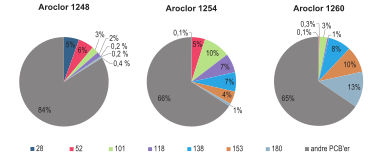
Figure 3. The content in terms of percentage (weight) of the seven indicator PCBs (PCB-28, PCB-52, PCB-101, PCB-118, PCB-138, PCB-153, and PCB-180) relative to the total amount of PCBs in the three Aroclor mixtures 1248, 1254, and 1260.
Chemical analyses were conducted for several congeners to study the composition of the Aroclor, Clophen, and Kanechlor products (Takasuga et al., 2006). Figure 3 shows the percentage content of the seven indicator PCBs in Aroclor 1248, 1254, and 1260, respectively (Takasuga et al., 2006). In the case of Aroclor 1248, sum7 PCB makes up 16 % of the total PCB content while the other PCB congeners constitute 84 % of the product. In Aroclor 1254, sum7 PCB makes up 34 % of the total PCB content while sum7 PCB makes up 35 % of Aroclor 1260.
Considering the homologues for Chlorphen, Kaneclor, and Aroclor, there are great similarities between the products A-30, KC-300, and 1248 and this also applies to A-40, KC-400, and 1254, A-50, KC- 500, and 1260, and A-60, KC-600, and 1262 (Takasuga et al., 2006). Except for certain types of Aroclor, the low-chlorinated technical mixtures typically contain 12–18 % sum7 PCB while the higher-chlorinated mixtures contain 32–40 % sum7 PCB (Takasuga et al., 2006).
1.1.5 Indicator PCBs
Chemical analytical tests of building material samples for the content of several PCBs (e.g., indicator PCBs) will indicate whether the composition corresponds to one of the commercial mixtures. If so, we can identify how large a share the indicator PCBs represent of the total PCB content. Thus, the result can be adjusted by a factor corresponding to that specific mixture. The result will equal the total PCB content (i.e., the total PCBs) although only six or seven indicator PCBs have been quantified.
If the material has a PCB profile corresponding to Aroclor 1248, one multiplies by factor 6 when converting sum6 PCB to the total amount of PCBs in a material. For Aroclor 1254 and 1260, factor 3 is used to convert sum6 PCB, because sum6 PCB make up almost the same quantity of total PCBs in the two mixtures.
If the composition of congeners in the chemical analysis does not correspond to any commercial mixture, multiplication factor 5 would usually be used to estimate the total PCB content based on sum6 PCB (Verein Deutscher Ingenieure, 2009).
1.2 Physico-Chemical Properties
The following sections detail the chemical structure and selected physico-chemical parameters for selected PCB types.
1.2.1 Chemical Structure
PCBs are a group of organic compounds consisting of two interrelated phenyls (biphenyls) where the hydrogen atoms have been wholly or partly substituted by chlorine atoms (see Figure 4). There are 209 possible congeners, depending on number and position of chlorine atoms. Although individual PCB congeners share many similarities and related properties, their physico-chemical and toxic properties differ. Twelve congeners have dioxin-like properties (see Section 1.3.1, Dioxin-like and Non-Dioxin-like PCBs).
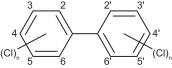
Figure 4. Schematic of a biphenyl molecule. 2-6 and 2’-6’ represent hydrogen atoms which can be substituted for chlorine atoms when producing PCBs.
1.2.2 Selected Physico-Chemical Properties
Table 2 lists selected physico-chemical properties for the seven indicator congeners and their CAS numbers (unique number configurations used to identify chemical compounds). Any chemical described in the literature is assigned a CAS number by "Chemical Abstract Service".
Table 2. Selected chemical properties of the seven indicator congeners.
CAS- | Chemical | Molecular weight a) | Vapour pressure at | LogK a) LogK b) ow oa | ||
|---|---|---|---|---|---|---|
number | formula | [g/mol] | 23 °C a) [Pa] | at 23 °C | ||
PCB-28 | 7012-37-5 | C12H7Cl3 | 257.5 | 0.0051 | 5.76 | 8.09 |
PCB-52 | 35693-99-3 | C12H6Cl4 | 292 | 0.00142 | 6.37 | 8.62 |
PCB-101 | 37680-73-2 | C12H5Cl5 | 326.4 | 0.000133 | 7.05 | 9.51 |
PCB-118 | 31508-00-6 | C12H5Cl5 | 326.4 | 1.81·10-5 | 7.02 | 10.0 |
PCB-138 | 35065-28-2 | C12H4Cl6 | 360.9 | 7.84·10-6 | 7.77 | 10.5 |
PCB-153 | 35065-27-1 | C12H4Cl6 | 360.9 | 8.36·10-6 | 7.74 | 10.4 |
PCB-180 | 35065-29-3 | C12H3Cl7 | 395.3 | 5.48·10-7 | 8.47 | 11.3 |
- Weschler & Nazaroff, 2010.
All PCB congeners are stable and resistant to degradation and are resistant to both acids and bases. PCB congeners have a low electric and high thermal conductivity and are thermally stable, which makes them useful for a multitude of products (e.g., as insulants in transformers and capacitors) (World Health Organization, 2003; Guo et al., 2011). Most congeners are solid substances in their pure form and their melting point rises proportionally to their molecular weight (chlorine content). Commercial PCB mixtures are usually yellowish oily liquids. PCBs are fire retardant due to their high flashpoint. The vapours are heavier than air and non-explosive (World Health Organization, 2000).
Vapour Pressure
Vapour pressure is generally low for all congeners. This means that more than 30 years after PCBs were banned in Denmark, the substances have off-gassed only to a limited extent, and still exist in high concentrations in the original materials. PCB congeners with a high chlorine content are relatively non-volatile and their vapour pressure tends to drop as the chlorine content increases (World Health Organization, 2003).
The vapour pressure of the congeners is highly dependent on temperature. This is significant when measuring PCBs in indoor air because PCB concentrations in the air can vary solely due to changing temperatures within a measurement period or between multiple measurement periods to be compared(see Section 1.6.3, Correlation between Temperature and PCBs in Indoor Air). The interdependence of temperature and vapour pressure forms the basis for using bake-out as a remediation method (see SBi Guideline 242, Renovering af bygninger med PCB (Renovating Buildings Containing PCBs), 2.5 Bake-Out (Andersen, 2013b)). The vapour pressure rises by factors between 6 and 9 with a rise in temperature from 20 to 40 °C, depending on the given congener.
Trials conducted with the emission of different PCB congeners from caulk with Aroclor 1254 found that the emission factor for each of the congeners studied (nos. 52, 66, 101, 110, and 118) is increased by factors 5–9 for each 10 °C the temperature rose in the interval 10–50 °C (Guo et al., 2011). Trials with two types of joints concluded that the composition of the caulk is likely to be highly significant for the emission’s sensitivity to temperature.
Partition Coefficients, KOW and KOA
The water solubility of PCBs is low while they have high solubility in fat and most organic solvents (hydrophobic and lipophilic properties). The more chlorine atoms, the higher the fat-solubility (World Health Organization, 2000). The hydrophobic properties can be expressed as the distribution of the substance between the organic solvent octanol and water (the octanol-water partition coefficient, KOW). The more chlorine atoms on the molecule, the lower the water-solubility. The distribution of the substance between octanol and air is expressed using KOA (the octanol-air partition coefficient, KOA).
1.3 Toxic Properties
The PCBs possess different toxic properties, and these differences apply to the toxic mechanisms and toxicity of the PCBs.
1.3.1 Dioxin-like and Non-Dioxin-like PCBs
Chemical Structure
PCB congeners are divided according to whether they are dioxin-like (DL) or non-dioxin-like (NDL), as these groups have different toxic mechanisms. “Dioxins” are a common designation for polychlorinated dibenzo-para-dioxins (PCDD) and polychlorinated dibenzofurans (PCDF). Figure 5 shows the chemical structure for PCB-52 (NDL), PCB-118 (DL), and TCDD (the most toxic of the dioxins, known as Seveso dioxin). PCBs are dioxin-like if there is one or no chlorine atom at the positions next to the bond bridging the two rings (biphenyl bridge). This means that dioxin-like PCBs include the co-planar, non-ortho, and mono-ortho PCBs. There are 12 dioxin-like PCBs: PCB-77, PCB-81, PCB-105, PCB-114, PCB-118, PCB-123, PCB-126, PCB-156, PCB-157, PCB-167, PCB-169, and PCB-189 (Van der Berg et al., 2006).
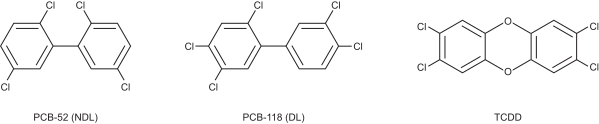
Figure 5. Chemical structure of the non-dioxin-like PCB-52, the dioxin-like PCB-118, and the most toxic of the dioxins TCDD (2,3,7,8 tetrachlorodibenzo dioxin).
Toxic Mechanisms
The chemical structure of the dioxin-like PCBs means that they bond to the same receptor in the body and therefore have the same toxic mechanism as dioxins. The toxic mechanism of the other PCBs is distinct but pronounced. The composition and concentrations of PCB congeners in indoor air is dependent on the specific product containing PCBs (see Section 1.5.1, Source Types). Measurements of the indoor air were made in the flats at the Farum Midtpunkt housing estate, testing for 24 congeners, including the dioxin-like PCBs. The measurements showed that the volatile PCBs were dominant in the indoor air, but there were very low concentrations of dioxin-like PCBs. No high-chlorinated dioxin-like PCBs were detected (Frederiksen et al., 2012).
What is common among PCBs is that they accumulate in the body and are excreted slowly. This tends to increase proportionally with the level of chlorination. Thus, the half-life of PCB-28 in the body is estimated at 5.5 years while that of PCB-153 is 14.4 years (Ritter et al., 2011).
Toxicity
The toxicity of dioxin-like substances is calculated in toxic equivalents (TEQs) and TEQs can be used to determine limit values for foods, for example. TEQs can be calculated by adding up the concentration of a substance and multiplying it with a toxic equivalence factor (TEF). TEF is based on the most potent substance TCDD (Seveso dioxin), which, by definition, has a TEF value of 1. The remaining dioxins and dioxin-like PCBs are allocated TEF values according to their toxicity in relation to TCDD.
For dioxin-like PCBs, the TEF values are between 0.00003 and 0.1 (Van der Berg et al., 2006). The most toxic congener is PCB-126.
1.3.2 Exposure Paths
PCBs and other substances can be absorbed by the body via three pathways:
- Oral ingestion
- Inhalation
- Dermal absorption.
Ingestion Via Food, Dust, and Soil
Ingestion via food is usually the primary PCB exposure pathway. Given that PCBs are fat-soluble and accumulate in the food chain, they are primarily found in fatty fish, meat, and dairy. It is estimated that the majority of the population’s PCB exposure derives from foods (Danish WEA et al., 2011).
In PCB-contaminated buildings, building occupants might ingest PCBs in the form of contaminated dust settling onto foods or other substances ingested orally. A laboratory study has shown a significant intake of PCBs from dust into the alimentary canal (Ertl & Butte, 2012). It has been estimated that an adult ingests approx. 30 mg of dust per day while small children ingest around 100 mg per day (US Environmental Protection Agency (EPA), 2011).
Inhaling and Dermal Absorption
People occupying PCB-contaminated buildings can also absorb significant amounts of PCBs by inhalation as the concentration of PCBs in the indoor air may be considerable. Researchers have compared the presence of different congeners in blood plasma from residents in dwellings with and without PCBs on the Farum Midtpunkt housing estate. Among other insights, findings indicate that residents in dwellings with PCBs in the indoor air have a significantly higher content of the low-chlorinated PCBs with three to four chlorine atoms (Meyer et al., 2013). Findings also indicate a correlation between the PCB-28 content in blood plasma and indoor air, respectively. The Danish Health Authority’s recommended action values were determined based on PCB concentrations in indoor air (see Section 1.3.5, Recommended Action Values).
Finally, it is possible to absorb PCBs through the skin after contact with PCB-contaminated dust or direct dermal contact with contaminated material such as caulk or other PCB-containing materials. It is difficult to estimate the significance of this mechanism. Based on laboratory studies and an exposure scenario, it has been estimated that dermal absorption is by far the most important exposure pathway for dust-borne PCBs compared to oral ingestion (Ertl & Butte, 2012).
Studies of a similar group of substances (polybrominated diphenyl ethers, PBDEs), which are also markedly present in the indoor climate, both airborne and dust-borne, show a clear correlation between concentrations of the substance in the blood and the frequency of hand washing, which seems to indicate that dermal absorption is significant for this group of substances (Watkins et al., 2011).
Based on measurements from the flats on the Farum Midtpunkt housing estate, exposure was calculated to derive from air, dust, and dermal contact. Calculations indicate that exposure through dermal contact with caulk is significant and exposed caulked joints should therefore be covered up (Lundsgaard & Mørck, 2010).
The Danish Health Authority has published a report reviewing the harmful effects of the various types of PCBs (Danish Health Authority, 2013b). Based on this report, it was concluded that PCBs in indoor building air do not result in acute illness, but there is cause to reduce high exposure levels to prevent various harmful long-term adverse health effects.
In 2014, The Danish Health Authority published Sundhedsstyrelsens FAQ om børn og gravide – april 2014 (The Danish Health Authority's FAQ on Children and Pregnant Women – April 2014) (the Danish Health Authority, 2014) in relation to PCB-contaminated indoor air. From a health perspective, it is recommended that special focus be directed at places where the indoor climate is highly contaminated the building with a high degree of use, and places occupied by children, young people, and women of child-bearing age. See also section 1.3.5, Recommended action values.
1.3.3 Effects in Animal Trials
The toxicity of PCBs has been studied in several animal trials. However, many of these trials were conducted with technical PCB mixtures, making it difficult to discern the effects of non-dioxin-like PCBs from those of dioxin-like PCBs. It is problematic, therefore, to say anything specific about many of the individual congeners.
Trials have shown PCBs to have low acute toxicity. The most interesting animal trials are those where exposure continues for long periods and potentially several generations. The trials indicate that PCBs can affect several bodily functions, including the following observed effects (summarised in Gunnarsen et al., 2009):
- Impact on the thyroid gland and thus metabolic hormones
- Weakening of the immune system
- Developmental impairment of offspring, including altered learning abilities
- Changes in reproductive systems
Moreover, studies have indicated that the technical PCB mixtures cause cancer of the liver and thyroid gland in female rats (Gunnarsen et al., 2009). From March 2013, all PCB congeners and mixtures have been classified in group 1, human carcinogens, by the WHO’s International Agency for Research on Cancer (IARC) (International Agency for Research on Cancer, 2015).
1.3.4 Effects on Humans
The effect of PCBs on humans can be assessed based on:
- Poisoning due to accidents
- Occupational health studies of highly exposed workers
- Large population studies (epidemiological studies)
Poisoning Due to Accidents
In Japan in 1968 (Yusho episode) and in Taiwan in 1979 (Yu-Cheng episode), rice oil was accidentally contaminated with PCBs and those who had ingested the oil suffered violent poisonings which manifested with chloracne (causing skin changes particularly in the face), as well as changes in the thyroid gland and vision impairment (Gunnarsen et al., 2009). Due to heating, some of the PCBs had been converted into dioxins and furans and it is impossible to separate the specific effects of components from one another. The victims of the Yusho episode still suffered elevated PCB levels in their bodies more than 35 years after the accident (Todaka et al., 2009).
Occupational Health Studies
Generally, the risk of cancer in certain tissue types is estimated to increase if individuals are exposed to PCBs in the working environment (Gunnarsen et al., 2009).
Occupational health studies are less clear, as some report an increased occurrence of cancer of the liver, gall bladder, and bile duct while others do not report an increased risk. The different results may be the result of there being relatively few occupational health studies carried out with relatively few subjects. Both factors can make it difficult to discover rare cancers (Lindell et al., 2012).
A study of a large groups of workers (>17,000) focusing on the effects of PCBs on the nervous system indicates increased occurrences of Parkinson’s syndrome and Alzheimer’s disease among highly exposed women (Steenland et al., 2006). Furthermore, other studies indicate that PCB exposure among workers can increase the risk of developing type 2 diabetes (Persky et al., 2012).
A literature review was conducted to discover whether there is a correlation between occupational exposure to PCBs and the risk of disease. Based on the selected material, it was concluded that, thus far, there is no evidence to suggest that PCBs in the working environment will increase the risk of disease (Pedersen et al., 2013).
Large-Scale Population Studies
Population studies detail the effect of PCBs on a large group of ordinary people exposed to background levels of PCBs. Often, such studies include groups occupying PCB-contaminated properties or who frequently eat fish that may contain PCBs. Compared to the occupational health studies, the population studies provide an opportunity to survey a much larger group of people. Population studies describe general trends in relation to large groups. The effects cannot be directly transferred to individuals, for example, to assess the effect of a given PCB concentration in the blood.
Many population studies indicate that foetuses exposed to PCBs may suffer serious adverse developmental effects. Thus, several scientific studies have described a correlation between PCB exposure at the embryo stage and children's IQ later in life (Stewart et al., 2008, 2012). Moreover, studies have indicated correlations between PCB exposure at the embryo stage and reduced birth weight, reduced effect of children's vaccinations, and changed sex hormone patterns in 14-year-old boys (Govarts et al., 2012; Grandjean et al., 2012; Heilman et al., 2006).
Some of the few studies made of children after birth indicate a correlation between asthma and certain PCB congeners in the blood of 2-year-olds (Tsuji et al., 2012) while other studies indicate an effect on the sex hormones in new-borns exposed to PCB-153 (Rennert et al., 2012). However, the most serious effects of PCBs in children are estimated to be caused by their exposure to PCBs at the embryo stage (Gascon et al., 2012).
Like the occupational health studies, the population studies showed toxic effects of PCBs on the nervous system in adults. For example, a correlation has been identified between PCB concentrations in the body and the occurrence of Parkinson’s syndrome in women (Hatcher-Martin et al., 2012). Several examples of reproductive effects have been identified, such as reduced fertility among both men and women (Meeker & Hauser, 2010; Meeker et al., 2011).
1.3.5 Recommended Action Values
The Danish Health Authority
Normally, limit values and action values are determined based on tolerable daily intake (TDI), but no internationally recognised TDI for non-dioxin-like PCBs or total PCBs exists. To improve risk management, some countries have determined their own TDI for total PCBs. TDI can either be calculated from the highest concentration with no-observed-adverse-effect-level (NOAEL) in animal studies, or from the lowest concentration with the lowest-observed-effect-level (LOAEL). The values are adjusted by several safety factors depending on the knowledge base. The suggested TDI values are between 20 ng and 1 µg per kg body weight/day (World Health Organization, 2003; Ewers et al., 2005; Arnich et al., 2009).
The Danish Health Authority (2013a) has revised their recommendations on action values from 2011. There are two recommended action values for PCBs in indoor air of 300 and 3,000 ng/m3. When the 300 ng/m3 limit is exceeded, the Danish Health Authority recommends that action be taken in the long term. When the 3,000 ng/m3 limit is exceeded, the authority recommends that action be taken without undue delay. Excessive levels should lead to the immediate implementation of temporary abatement. PCB concentrations in air are calculated as 5 times the sum of the 7 indicator PCBs (www.pcb-guiden.dk) (see Section 1.1.4, Indicator PCBs and Section 6.2, Analytical Testing Package).
The Danish Health Authority’s recommended action values are based on the German guidelines from Arbeitsgemeinschaft der für das Bau-, Wohnungs- und Siedlungswesen zuständigen Minister der Länder (ARGEBAU, 1994).
The German authorities have determined a TDI for PCBs as 1 µg/kg body weight/day based on a NOAEL of 100 µg/kg body weight/day in animal studies (Ewers et al., 2005). The lower recommended action value of 300 ng/m3 is based on the fact that max. 10 % of the TDI should come from the air, leaving tolerance for other PCB exposure (e.g., from food). Concentrations below 300 ng/m3 are estimated not to result in increased health risks but should be monitored until levels have become safe and stable.
The upper action value of 3,000 ng/m3, on the other hand, is based on the TDI being reached solely by indoor-air PCBs. The calculations use a safety factor of 100, assume that adults weigh 70 kg and inhale a volume of 20 m3 in 24 hours (or children, weighing 35 kg, inhale a volume of 10 m3), and assume that individuals occupy the buildings 24 hours/day.
The Danish Health Authority’s action values with accompanying recommendations are listed in Table 3. From a health perspective, PCBs should be reduced in the following ways:
- Reducing exposure to PCBs in the indoor climate.
- Managing PCB-containing waste from buildings so that it will not enter the natural cycle and potentially end up in foodstuffs.
To reduce PCB exposure in the indoor climate, the Danish Health Authority has directed special focus at buildings where contamination levels are high and where there are many occupants, including children, young people, and women of child-bearing age. If contamination in the range of 300–3,000 ng/m3 is confirmed, the Danish Health Authority recommends that buildings occupied by children and young people be given high priority. Furthermore, building usage intensity, level of contamination, and length of occupancy should also be considered.
Table 3. The Danish Health Authority’s recommended action values for PCBs in indoor air (the Danish Health Authority, 2013a).
PCB Concentrations in Indoor Air | Action |
|---|---|
> 3,000 ng/m3 | The Danish Health Authority estimates that occupancy for longer periods may be associated with significant health risks and should, in most contexts, be considered an immediate health risk. Source removal and/or encapsulation without undue delay is recommended, even in buildings used only periodically over a 24-hour period. Temporary abatement should be implemented immediately. These will normally include optimizing ventilation, temperature regulation, and intensified cleaning (adjusted to current cleaning levels and building use). |
300–3,000 ng/m3 | The Danish Health Authority estimates that occupancy for longer periods may have adverse health effects. The implementation of immediate abatement is recommended. Temporary abatement is only expected to effectively reduce PCB concentrations to below 300 ng/m3 in cases of light contamination and removal and/or source encapsulation will often be necessary. The following factors should be considered when prioritising interventions:
|
below 300 ng/m3 | The building contains PCBs, but the Danish Health Authority estimates that the exposure will not result in increased health risks. |
Although the building in question may not be occupied around the clock, a precautionary principle should apply (Ewers et al., 2005). This is because it is impossible to account for any remaining PCB sources (e.g., a high fish intake, dust exposure, or occupancy of other contaminated buildings). In some cases, involving short-term occupancy, the recommended action values may be deviated from after a concrete assessment made by the local authority. In this context, the local authority will seek advice from the chief medical officer.
The first edition of SBi Guidelines 241 contained proposals from the US Environmental Protection Agency (EPA) for acceptable annual mean action values for PCBs in indoor air pertaining to children in child-care centres and schools, and for persons in other age groups. These recommendations have now been revised (US EPA, 2015). They are not included in this edition as PCB concentrations in air are determined differently to sum7 PCB and adjustment factor 5 (see Section 6.2, Analytical Testing Package) and are thus not comparable to Danish figures.
The Danish Working Environment Authority
For concerns regarding PCBs in indoor air of buildings and premises where work (e.g., office work) is carried out, the Danish WEA may issue recommendations or enforcement notices. If PCB concentrations in indoor air are estimated to be excessive, the Danish WEA will usually issue an enforcement notice. The Danish WEA’s assessment is based on the Danish Health Authority's recommended action values, but the WEA values are calculated with shorter occupancy times (see PCB i bygninger (PCBs in Buildings) (Danish WEA, 2014)). For workplaces, the Danish WEA estimates that building occupancy normally extends to only one fourth of the time and, consequently, PCB concentrations are allowed to be higher than the action values stipulated by the Danish Health Authority. The lowest action value for a workplace is 1,200 ng/m3.
The Danish WEA has determined an upper action value of 10,000 ng/m3 for indoor air. For work (e.g., office work) in rooms contaminated by PCBs, the Danish WEA bases its recommendations to supervisors on the values in Table 4. The values assume normal full-time working hours, corresponding to approx. one fourth of the total weekly hours. If working hours are shorter, values are graduated accordingly.
Table 4. The Danish WEA’s recommendations to supervisors (the Danish WEA, 2014).
PCB Concentrations in Indoor Air | Typical Action |
|---|---|
> 10,000 ng/m3 | Normally an immediate enforcement notice is issued for the implementation of measures to reduce concentrations immediately. The Danish WEA will only accept brief and occasional work where values are close to 10,000 ng/m3 which is the Danish WEA’s limit value.isk. Source removal and/or encapsulation without undue delay is recommended, even in buildings used only periodically over a 24-hour period. Temporary abatement should be implemented immediately. These will normally include optimizing ventilation, temperature regulation, and intensified cleaning (adjusted to current cleaning levels and building use). |
3,000–10,000 ng/m3 | The Danish Health Authority estimates that occupancy for longer periods may have adverse health effects. The implementation of immediate abatement is recommended. Temporary abatement is only expected to effectively reduce PCB concentrations to below 300 ng/m3 in cases of light contamination and removal and/or source encapsulation will often be necessary. The following factors should be considered when prioritising interventions:
|
1,200–3,000 ng/m3 | Enforcement notice with a deadline for interventions to reduce concentrations. Graduations are made according to working hours. The deadline can be 1–2 years for full-time work. |
Below 1,200 ng/m3 | No reaction. |
For all concentrations above 1,200 ng/m3, guidance is given on temporary and permanent measures to potentially reduce concentrations. Interventions can be cleaning, ventilation, temperature reduction, replacement, or similar measures (Danish WEA, 2014).
In the concentration interval 1,200–10,000 ng/m3, supervisors will usually issue an enforcement notice with a deadline to implement measures to reduce concentrations. The deadline is estimated relative to the working hours of each individual, the number of employees, and the nature of the source (easy or difficult to remove or encapsulate). In the concentration interval 3,000–10,000 ng/m3 the deadline can be between 3–12 months for full-time work while, in the interval 1,200–3,000 ng/m3 it can be 1–2 years.
When the Danish WEA issues enforcement notices concerning documented risk of adverse health effects from PCBs in the indoor climate, a consultancy notice must also be issued (Danish WEA, 2014). This is described in the At-vejledning 1.10.1 (WEA Guidelines), July 2013, (Danish WEA, 2013). The enterprise will be directed to use an authorised working environment consultancy firm (with a consultancy enforcement notice) when it has received an enforcement notice on the documented risk of adverse health effects derived from PCBs in the indoor climate.
The above applies to work (e.g., office work) in buildings with PCBs in indoor air. For renovation or demolition work where component materials are contaminated by PCBs, employers must ensure that the work is planned, structured, and executed safely (Danish WEA, 2014). If there are occupants in a building where work involves handling PCB-containing materials, special precautionary measures must be implemented (see SBi Guidelines 242, Renovating Buildings Containing PCBs (Andersen, 2013b)).
1.4 PCBs in Buildings and Building Materials
PCBs were used in several building materials during the approximate period from 1950 until 1 January 1977 when it was banned in open applications (see Section 1.1.1, Applications). This section describes the extent of use, material groups, and when the materials might have been used. Section 5.2, Construction Products Potentially Containing PCBs, details the building materials in which PCBs have been discovered and where they were used.
Furthermore, PCBs were used in so-called closed applications (e.g., in certain capacitors and transformers) (Danish EPA, 1983). A ban against the import and sale of PCBs in closed applications was introduced in 1986 (see Section 1.8, Rules).
1.4.1 Use of PCBs in Building Materials
PCBs were used legally as plasticisers in elastic and soft building materials. Moreover, PCBs were used as additives due to their fire-retardant and insulating electric properties. In the Scandinavian countries, PCBs were used in the following building materials (Trap et al., 2006; Jensen et al., 2009):
- Elastic and plastic caulk
- Sealant in insulating glazing units
- Mounting materials for insulating glazing units (putty and plastic sealant tape)
- Paint
- Fire retardant in fibreboard sheets
- Plastic cables
- Flooring
- Concrete (as an additive)
PCBs were primarily used in caulk and sealant in insulating glazing units, but it is not completely clear which types of building materials in Denmark may contain PCBs. Table 18 in Section 5.2, Construction Products Potentially Containing PCBs lists building materials and details which materials are likely to contain PCBs, where PCBs was discovered to a limited extent, and in which materials no PCBs have yet been discovered. The table is based on a study covering Denmark (which excluded Greenland and the Faroe Islands).
Caulk containing PCBs is used in elastic joints around facade cladding, windows and doors, in expansion joints between building parts, on balconies, and sound-insulating joints in partition walls where joints are usually concealed. These joints were used both internally and externally.
Small Capacitors
Several PCB applications do not directly relate to building materials but may influence the concentration of PCBs in indoor air. PCBs were also used in the so-called closed application of small ballast capacitors for fluorescent lighting (Danish EPA, 1983) (see Section 5.2.4, PCBs in Capacitors). A ban against the import and sale of PCBs in closed applications was introduced in 1986 (see Section1.8, Rules).
1.4.2 Usage and Residual Amounts of PCBs
In Denmark in 1983, it was estimated that 80–120 tons of PCBs were used for caulk, 130–270 tons for paint (e.g., facade paint), and 86–100 tons for glue to insulate glazing units (Danish EPA, 1983). Unlike in Norway, PCBs are unlikely to have been used as a concrete additive in Denmark (Techno Consult & Demex, 2005). In 2006, however, the consumption of PCBs in glue for insulating glazing units was estimated at approx. 200 tons and it was estimated that approx. half of this had not been cleared (Trap et al., 2006). In 2008, it was estimated that 50–120 tons of PCBs were left in insulating glazing units in Danish buildings (Vestforbrænding et al., 2008). Based on a limited number of test samples, in 2009 it was estimated that between 6 and 21 tons of PCBs remained in caulk in Danish buildings while information based on a questionnaire survey conducted by the sealant trade suggests that figure to be roughly 75 tons (Gunnarsen et al., 2009).
The use of PCBs in paint and lacquer ceased on 1 July 1973 in the manufacturing of construction products in Denmark (Danish EPA, 1974) while the use of PCBs in sealants for insulating glazing units and in caulk ceased during 1974 (Danish EPA, 1983).
There is an estimated consumption of 175–325 tons of PCBs for small capacitors in fluorescent light ballasts, white goods, etc. (Danish EPA, 1983). Based on a mean lifespan of 10–15 years for small capacitors, the Danish EPA expected the PCB-containing capacitors to be phased out in around 1998, but in 1999, estimations suggested that there may still be PCB-containing capacitors (e.g., in old fluorescent light ballasts), as there has been a degree of reuse (Danish EPA, 2000).
The residual amounts of PCBs in buildings in Denmark is estimated based on the results of the national mapping of PCBs in materials and indoor air (Grontmij & COWI, 2013). Table 5 indicates the estimated amounts for building material types and capacitors in fluorescent light ballasts as well as the distribution of the amounts in relation to the total estimated amount. The latter is calculated based on an average consideration of each group.
Table 5. Estimated amounts of residual PCBs in buildings in Denmark, distributed across different types of building materials and capacitors in fluorescent light ballasts. Moreover, the table indicates how the amounts are distributed relative to the total estimated amount (Grontmij & COWI, 2013).
Material | Residual Amount of | Share of Residual Amount |
|---|---|---|
PCBs [ton] | of PCBs [%] | |
Caulk around doors and windows | 7–35 | 40 |
Caulk between other building parts | 2–15 | 16 |
Paint | 0.3–5 | 5 |
Flooring | 0.1–2 | 2 |
Insulating glazing units | 5–15 | 19 |
Capacitors in fluorescent light ballasts | 2–7 | 9 |
Secondary and tertiary sources | 0.7–7.5 | 8 |
Total | 17–87 |
1.4.3 PCBs in Building Materials
A mapping of PCBs in materials and indoor air has been conducted on a national scale (Grontmij & COWI, 2013). The study comprises mapping of PCB-containing materials in 352 buildings erected during the period 1950–1977, directing focus at PCBs in caulk, certain types of paint, and flooring. The buildings were divided into single- and two-family dwellings, multi-storey residential buildings, private office buildings, and public institutions and office buildings. The report includes results from a series of mappings conducted in municipalities across the country. The discovery of PCBs in materials is divided into three classes depending on concentrations: more than 0.1 mg/kg PCB, more than 50 mg/kg PCB, and more than 5,000 mg/kg PCB.
Table 6 indicates the estimated number of buildings in Denmark which contain PCBs in caulk, paint, or flooring and were erected during the period 1950–1977. The values are reported within a 90 % confidence interval and divided according to PCB concentrations in the material samples. The number and percentage share of buildings from the period is also indicated. The buildings are divided into building types.
Table 6. Estimated number and share (%) of buildings in Denmark, erected during the period 1950–1977, containing PCBs in caulk, paint, or flooring. The values are reported within a 90 % confidence interval and are divided according to PCB concentrations in material samples (Grontmij & COWI, 2013).
Building Type | Number and Parts of Buildings in Denmark, Erected During the Period 1950–1977 with Materials Exceeding the Reported Concentration (90 % Confidence Interval) | |||
|---|---|---|---|---|
≥ 0.1 mg/kg | ≥ 50 mg/kg | ≥ 5,000 mg/kg | ||
Single- and two-family dwellings | 390,000–470,000 | 80,000–140,000 | 20,000–60,000 | |
67–79 % | 13–24 % | 4–11 % | ||
Multi-story residential buildings 1) | 12,600–14,100 | 3,600–5,900 | 1,000–2,700 | |
84–95 % | 24–40 % | 7–18 % | ||
Private office buildings | 13,900–19,900 | 5,300–11,800 | 1,700–7,000 | |
60–86 % | 23–51 % | 8–30 % | ||
Public institutions and office buildings 2) | In caulk | 4,700–5,700 | 2,100–2,900 | 1,200–1,800 |
22–27 % | 10–13 % | 6–9 % | ||
In paint and flooring | 13,000–18,000 | 2,400–6,500 | 300–2,800 | |
62–83 % | 11–30 % | 1–13 % | ||
- The figures are for multi-storey residential buildings and not individual flats (the latter is at least ten times bigger than the former).
- Within this category are buildings which contain both PCB-containing caulk and PCB-containing paint. Therefore, the columns cannot be added up.
PCB-containing paint occurs in the majority of the buildings and underpins the widespread occurrence of PCB-containing materials with a relatively low PCB content (Grontmij & COWI, 2013).
Single- and Two-Family Dwellings
The occurrence of materials with more than 50 mg/kg PCB was 13–24 % in single- and two-family dwellings, which is less than in the other building types (Grontmij & COWI, 2013). The occurrence of materials with more than 5,000 mg/kg PCB is also less for single- and two-family dwellings than for other building types.
In single- and two-family dwellings, the primary PCB-containing material was paint, used inside (e.g., on water pipes and floors in larders, washrooms, office, and storage rooms) and outside (on stairs). Caulked joints with high PCB concentrations (more than 100,000 mg/kg) were discovered around interior and exterior doors and windows in two buildings. No incidents of caulked joints with high PCB content between concrete slabs or in sanitary joints in bathrooms were found. Sources which were frequent PCB sources in multi-storey residential buildings with high indoor air concentrations are distinctly less frequent in single- and two-family dwellings.
Multi-Storey Residential Buildings
During the study, exterior caulked joints with high PCB concentrations were discovered between concrete slabs in several multi-storey residential buildings, (Grontmij & COWI, 2013). Only a single incident of interior caulked joints with high PCB concentrations was discovered. Hence, the occurrence of interior caulked joints with high PCB concentrations is not widespread, but interior caulked joints with high PCB concentrations cannot be ruled out in a small percentage of all multi-storey residential buildings.
Paint with PCB concentrations exceeding 50 mg/kg PCB was chiefly discovered in interior stairways, washrooms, storage rooms, basement bike storage rooms, and boiler rooms. The paint had been applied to floors, walls, soil stacks, and metal railings.
Private Office Buildings
The occurrence of PCB-containing materials in private office buildings largely correspond to the findings in public buildings (Grontmij & COWI, 2013).
Public Institutions and Office Buildings
High occurrences of PCBs in caulk have proved to be more frequent in schools than in other public buildings (Grontmij & COWI, 2013). This is also described in a memorandum on schools (Danish Energy Agency, 2013).
Time-Related Distribution
Data from the national mapping and local authority mapping of PCBs in materials indicate that PCB-containing caulk was used far more frequently during the period 1965–1974 than in other periods (see Figure 6). The difference in the time-related distribution is less marked for paint and flooring compounds. This could be because these materials were added to the buildings some years after erection (Grontmij & COWI, 2013).
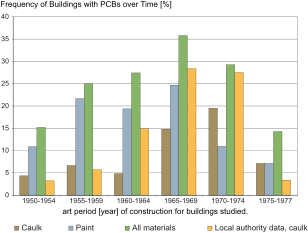
Figure 6. Frequency of buildings with more than 50 mg/kg PCB and frequency of caulk with more than 5,000 mg/kg PCB from municipal studies during the period 1950–1977 (Grontmij & COWI, 2013).
1.4.4 Caulking Compound
PCBs were used in elastic and plastic caulk during the period 1950–1976 in all types of building. Elastic caulk is hard or soft and its shape will be restored when distorted (e.g., tooled with a spatula). A completely plastic caulked joint will retain the form achieved through deformation.
Descriptions of construction projects from the period indicate that elastic caulked joints of polysulphide were specified. These materials typically had a PCB content of 5–30 %. However, it does not necessarily follow that the specified caulk was used. The caulk was, for a time, sold under several trade names (e.g., Thiokol, Thioflex, Vulkseal, Vulkfil, Lasto-meric, 1K, Terostat, PRC, and Rubberseal) (Gunnarsen et al., 2009).
In Sweden, a PCB content of 10 % is typically measured in caulks from this period (www.sanerapcb.nu). Polysulphide caulk is chiefly applied outside (Zachariassen et al., 1993; www.sanerapcb.nu).
Studies (e.g., at the flats on the Farum Midtpunkt housing estate and several Schools) have indicated that PCB-containing caulk has been used indoors. National and international studies have discovered PCBs in polyurethane, epoxy, mercatan, acrylic, and bitumen (Jensen et al., 2009) while there is no documentation to suggest that silicone-based caulk contains PCBs.
1.4.5 Insulating Glazing Units
PCBs were used in sealant in insulating glazing units produced in Denmark pre-1977 and in certain foreign insulating glazing units until 1980. It is estimated that approx. 75 % of insulating glazing unit manufacturers have used PCB-containing sealant between 1967 and 1973 (Trap et al., 2006). An insulating glazing unit measuring approx. 1 m2 may typically contain 50 g PCB in the sealant (Vestforbrænding et al., 2008; www.ruteretur.no).
Insulating glazing units collected at recycling centres in five municipalities were studied between December 2012 and March 2013 (Grontmij & COWI, 2013). Based on year-of-production labelling after 1980, it could be ruled out that 69 % of the deposited glazing units had been produced using PCBs. Samples were taken from the remaining 31 % of glazing units and PCB concentrations exceeding 50 mg/kg were discovered in the sealant glue in 34 % of the glazing units and in 29 % of the sealant tape.
A correlation was found between PCBs in sealant glue and sealant tape, indicating that the presence of PCBs in sealant tape was mainly due to tertiary contamination from sealant glue. However, some sealant tapes were presumed to be primary sources. In overall terms, the study concludes that 11 % of the deposited insulating glazing units contained more than 50 mg/kg of PCBs in the sealant glue while 4 % of the deposited glazing units contained more than 100,000 mg/kg PCBs in the sealant glue (Grontmij & COWI, 2013).
The Danish EPA has published guidelines on handling PCB-containing insulating glazing units (Danish EPA, 2014).
1.4.6 Paint
In Denmark, paints and lacquers were widely produced with admixed PCBs. The products were most frequently used for treating metal surfaces with strict requirements for resistance to chemical impact (e.g., paint for ships’ bottoms and acid-resistant surface treatment of industrial equipment) (Danish EPA, 1983). PCB-containing paint has also been used for corrosion protection of exterior metal in dwellings (primarily railings, e.g., for balconies) (Gronmij & COWI, 2013).
PCB-containing facade paints have been used (Danish EPA, 1983). Norwegian studies have demonstrated PCB content in facade paint (Andersson et al., 2004; Jartun et al., 2009) and this has also been demonstrated in Denmark (Alslev et al., 2013a; Grontmij & COWI, 2013). PCB-containing paint has been used where there has been a call for considerable abrasion and weather resilience (e.g., balconies and access balconies) (Branchearbejdsmiljørådet for Bygge & Anlæg, 2010).
In Germany, PCB-containing paint has been used to fire-resistant ceiling sheets, and emergency exits among other applications (Heinzow et al., 2004; Danish Standards, 2008a).
During the mapping of PCBs in materials and air (Grontmij & COWI, 2013), paint with high PCB concentrations was discovered in all building types, inside as well as outside structures (see Section 1.4.3, PCBs in Building Materials). The highest concentrations were discovered in exterior metal paint.
Certain PCB congeners have been discovered in pigments where PCBs do not appear to derive from traditional commercial products like Aroclor. Among other pigments, PCB-11 can be formed unintentionally in the production of certain yellow pigments (Rodenburg et al., 2010; Shang et al., 2014) and studies have identified different PCB congeners in certain azo and phthalocyanine pigments used in paint (Hu & Hornbuckle, 2010).
1.4.7 Flooring Compounds and Flooring
In the study featuring mapping of PCBs in materials and indoor air (Grontmij & COWI, 2013), 52 samples were collected from flooring compounds and PCB concentrations exceeded 0.1 mg/kg in 56 % of these.
Likewise, samples were collected from linoleum, vinyl, and cork flooring as well as carpet adhesive and here PCB concentrations exceeded 0.1 mg/kg in 58 % of the samples. The extent to which PCBs in flooring materials derive from adhesives, contaminated indoor air, or whether the flooring itself contained PCBs is not known (Grontmij & COWI, 2013).
Self-levelling flooring compounds with PCBs were widely used in Norway whereas in Denmark, PCB-containing self-levelling flooring compounds have only, so far, been detected in industrial and office buildings and a few multi-storey residential buildings (Jensen et al., 2009).
1.4.8 PCBs in Capacitors for Fluorescent Light Ballasts
Studies have been conducted on 516 fluorescent light ballasts to ascertain the presence of PCBs in their capacitors (Grontmij & COWI, 2013). The bulk of the ballasts came from e-waste enterprises, which primarily received them from recycling centres. Of these, 62 % could be disregarded, as they did not contain capacitors or were produced after 1986 when the ban against the import and sale of PCBs in closed applications had taken effect. Of the 38 % remaining ballasts, 23 % contained capacitors with a PCB content exceeding 100,000 mg/kg. This means that in 9 % of all the light ballasts examined, there was an actual PCB capacitor with a mean content of 30 g pure PCB. Of all examined capacitors, 16 % contained PCBs in concentrations exceeding 50 mg/kg while 37 % were in the interval 0.1–50 mg/kg PCB. It was previously legal to sell capacitors (and other products) with a PCB content of up to 50 mg/kg until the POPs Regulation took effect in 2004 (Grontmij & COWI, 2013). The Danish EPA (2015) has published guidelines on handling PCB-containing capacitors in light ballasts (see section 5.2.4, PCBs in Capacitors).
1.5 Primary, Secondary, and Tertiary Sources
1.5.1 Source Types
PCBs from construction products (admixed with PCBs during production) may have migrated to adjacent building materials and off-gassed into indoor air. PCBs off-gassed into indoor air can be redeposited and thus contaminate interior surfaces in a building. This also applies to PCBs evaporated from certain types of electric equipment such as small capacitors in fluorescent light ballasts, which may contain PCBs.
Primary sources comprise construction products originally admixed with PCBs and which could still contain significant amounts of PCBs. Here, PCBs were typically admixed to obtain specific properties, and quantities will often amount to a percentage of the weight. There may be primary sources where PCBs occur in lower concentrations. It is not yet clear whether this low content is due to polluted equipment or other causes.
Secondary sources comprise building materials which did not originally contain PCBs, but which now contain PCBs via direct contact with primary sources. In secondary sources, PCB concentrations close to primary sources can be considerable. Here, quantities will often amount to a permillage of the weight and vary considerably (Andersen et al., 2013).
Given that PCBs from primary and secondary sources off-gas into the air, tertiary sources may contain PCBs because they have sorbed PCBs from indoor air. Source types are illustrated in Figure 7. Primary, secondary, and tertiary sources may also be located on the exterior facade.
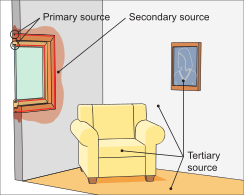
Figure 7. Three types of PCB sources in contaminated buildings.
In a building whose constituent parts contain PCBs, by far the greater part of the PCBs will come from primary sources, but due to secondary and tertiary contamination, simply removing the primary sources to abate indoor air contamination may prove insufficient. For renovation and demolition, secondary and tertiary sources must be identified and managed in accordance with the Statutory Order on Waste (see Section 3, Surveys Prior to Renovation or Demolition).
Calculations made based on material samples from the flats on the Farum Midtpunkt housing estate indicate that the primary sources here contained approx. 92 % of the total residual PCBs, while the secondary and tertiary sources contained approx. 6 % and 2 %, respectively (Kolarik et al., 2012).
1.5.2 Secondary Contamination of Building Materials
PCBs Sorption by Materials
Swedish studies of PCBs migrating to concrete, brick, aerated concrete, and wood from exterior caulked joints indicate great variations in the level of migration. The depth of migration is greater in aerated concrete, slightly less in concrete and brick, and least in wood. The porosity of the materials is probably important and the more porous the material, the deeper the migration (Rex et al., 2002). However, no studies of the porosity of the building materials were made.
The migration of PCBs from caulk and paint to adjacent materials was addressed in the study of PCBs in materials and indoor air (Grontmij & COWI, 2013). The level of migration varies greatly, and this variation is partly explained by differences in the amount of caulk applied in cavities and cracks in the surface. A statistical analysis indicates differences in the level of migration of PCBs into pine, aerated concrete, and brick where the migration into pine is deeper than for brick and aerated concrete. Few studies detail PCB migration into wood and the results appear to be divergent. Whether the migration of PCBs into wood is related to the density of the wood and any surface treatment (Rex et al., 2002) or whether the orientation of the source or wood grain are significant are subjects of speculation. PCBs are presumed to penetrate less into wood when a caulked joint lies lengthwise to the wood grain than if the joint is adjacent to end-grain of the wood (Lundsgaard et al., 2010).
In a Danish study, there does not appear to be a clear correlation between the concentration of PCBs in caulk and in the adjacent material where that material is exterior concrete or brick (Andersen et al., 2013). An analysis of the PCB concentration in the caulk is therefore insufficient to indicate whether the adjacent building materials contain PCBs. The study indicates that there is a tendency for relatively higher concentrations of PCBs near the primary source in concrete as compared to brick while PCBs have migrated further from the joint in brick than in concrete.
Composition of Congeners
In the primary sources, the composition of congeners is relative to the commercial mixtures originally used in the product. The composition of contaminated air is dominated by the more volatile congeners (see Section 1.6, PCBs in Indoor Air).
The composition of congeners in secondary and tertiary sources seems to depend on both vapour pressure and the octanol-air partition coefficient (see Section 1.2.2, Selected Physico-Chemical Properties), but also on type of material.
PCB Off-Gassing
Calculations have shown that in a model room with a volume of 17.4 m3 and an air change rate of 0.5 h-1, ventilation alone will remove as little as 0.023 g/year for max. indoor-air PCB concentrations of 300 ng/m3. 300 ng/m3 is the lower action value recommended by the Danish Health Authority (see Section 1.3.5, Recommended Action Values). Thus, it will take 44 years to remove 1 g of PCB while the concrete (secondary source) in the test room will contain approx. 33 g of PCBs and there will be approx. 11 g in tertiary sources. These calculations are based on the measurements of PCB content in materials from the flats on the housing estate in Farum (Kolarik et al., 2012).
1.5.3 Tertiary Contamination of Building Materials and Furnishings
Based on laboratory tests, investigations were made into the amount of airborne PCBs sorbed by various building materials and furnishings over a period of 500 hours (3 weeks) (Guo et al., 2012). The amounts of PCBs adsorbed per surface area varied for different materials over time and in relation to PCB concentrations in the air. The extent of the sorption also varied from one congener to the next. Generally, the sorption of low-vapour-pressure congeners was greater when compared to PCB concentrations in the air.
Among the materials tested, the PCB sorption form the air was highest in paint and lowest in an epoxy coating without solvents, various flooring materials, and brick. Furthermore, PCB emissions from exposed concrete were tested and tests indicated that re-emission (off-gassing of deposited PCBs) is a slow process. This confirms problems of re-emission from tertiary sources following abatement interventions where primary and secondary sources were removed or reduced (Guo et al., 2012).
PCB concentrations were measured in the indoor air in connection with the rehousing of and re-occupation by residents who had been living in the flats on the PCB-contaminated part of Farum Midtpunkt housing estate. The study concluded that residents may have contaminated furnishings which possibly can affect indoor air PCB-levels, though extent of furnishing contamination varies, possibly due to the type of material, furnishing mass, and length of exposure (Pangel and Lundsgaard, 2013).
1.6 PCBs in Indoor Air
This section describes how PCB concentrations in indoor air are affected by source type, temperature, air exchange, and dust. It also reproduces results from the national mapping of PCBs in materials and indoor air (Grontmij & COWI, 2013) (e.g., estimating the number of buildings where indoor-air PCB concentrations exceed the action values recommended by the Danish Health Authority). The buildings consist of single- and two-family dwellings, multi-storey residential buildings, private office buildings, as well as public institutions and office buildings.
1.6.1 Factors Affecting PCB Concentrations
A German study including more than a hundred buildings with PCB-containing caulked joints indicates that indoor and outdoor temperature, air humidity and ventilation affect indoor-air PCB concentrations. It also indicates that the specific PCB type, PCB content in caulked joints, joint size, surface area, and location are significant factors (Balfanz et al., 1993). A Swiss study reached the same conclusions (Kohler et al., 2005).
In the national mapping of PCBs in materials and indoor air (Grontmij & COWI, 2013), the discovery of PCBs in materials is compared to the discovery of PCBs in indoor air. There is a certain correlation between high PCB concentrations in materials and high indoor-air PCB concentrations, but variations are considerable, and the correlation is not unambiguous. Calculations were made to study the importance of air exchange, temperature, and surface area, but the results were not unambiguous. The analysis, however, shows that there is a better correlation between content in material and indoor air in the case of the PCB-28 congener (Grontmij & COWI, 2013).
The study disclosed several cases of indoor-air PCB content exceeding 300 ng/ m3 in premises where studies of materials had indicated that they did not exceed 50 mg/kg PCBs. Cases were also discovered where extensive painted surfaces with PCB concentrations of several thousand mg/kg had not caused elevated indoor-air PCB concentrations (Grontmij & COWI, 2013).
Based on a data analysis of PCB concentrations in materials and indoor air, Grontmij & COWI (2013) discovered that elevated levels of indoor-air PCB concentrations related to:
- Buildings with high PCB concentrations in interior caulked joints (≥ 100,000 mg/kg)
- Buildings with PCB content in interior paint (≥ 5,000 mg/kg)
- Buildings with PCB-containing capacitors
- Several buildings with relatively low PCB concentrations in paint and flooring where it has been impossible to determine the reason for elevated indoor-air PCB concentrations at that location.
Capacitors for fluorescent light ballasts may contain PCBs. Leakage from these capacitors may cause marked elevated levels of PCB concentrations in indoor air (MacLeod, 1981; Guo et al., 2011). This was the case in a school building in Roskilde with large numbers of capacitors in fluorescent light ballasts (Golder Associates, 2015). Capacitors are also believed to be the source of several cases of elevated indoor-air PCB concentrations discovered during the mapping of PCBs in materials and indoor air (Grontmij & COWI, 2013).
In Gothenburg, a multi-storey residential building with PCB-containing exterior caulk was investigated (Sundahl et al., 1999). Based on assumptions (e.g., about air exchange) it was estimated that the PCB concentration of approx. 600 ng/m3 total PCBs discovered in the indoor air was due to annual emissions of approx. 60 g PCBs. The total amount of PCB content in the caulk was estimated at 90 kg. Therefore, although some of the PCBs would off-gas to the exterior environment, many years would have to elapse before the contamination of the indoor climate would decrease (see Section 1.5, Primary, Secondary, and Tertiary Sources).
The many parameters influencing concentrations may lead to a marked variation in PCB concentrations in the indoor air of a building. At a school in Germany where the air was contaminated by PCBs, 83 measurements of the indoor air in different rooms were made over a two-year period. These measurements indicated PCB concentrations of 690–20,800 ng/m3 (median value 2,044 ng/m3) (Liebl et al., 2004).
1.6.2 Correlation Between Indoor-Air Congener Type and Building Materials
In the buildings included in the German study, the product Clophen was discovered in the caulk, but not Clophen A30 (Balfanz et al., 1993) (see Section 1.1, Commercial PCB Products). The study concluded that, as a very rough estimate, the highest concentrations of PCBs in air will derive from the use of Clophen A40 whereas the lowest concentrations will derive from Clophen A60. Thus, the highest concentrations of PCBs in air would occur when using the low-chlorinated PCB products (see Table 7). PCB concentrations in the caulk range from 2,000–60,000 mg/kg sum6 PCB. Clophen A40 corresponds to Aroclor 1248 (Breivik et al., 2002).
Table 7. Indoor-air PCB concentrations discovered for different types of Clophen in caulk. PCB concentrations are reported as total PCBs (sum6 PCB × 5) and observed during comparable conditions. The caulk contained 2,000–60,000 mg/kg sum6 PCB (after Balfanz et al., 1993).
Type of Clophen in Caulk | Total PCBs in Indoor Air (ng/m3) |
|---|---|
A30 | Not found |
A40 | 200–6,000 |
A50 | 200–2,500 |
A60 | 0 < 500 |
Like other studies (Kohler et al., 2002; Heinzow et al., 2007; Guo et al., 2011), the German study concludes that the composition of congeners in material and air is different, and that air predominantly contains light congeners. In a German study of 181 public buildings, PCB-28 and PCB-52 were found to be dominant in rooms where the primary source was caulk while PCB-101 dominated in rooms where ceiling sheets painted with high-chlorinated PCBs were the primary source (Heinzow et al., 2007).
Based on a study of 29 buildings in Switzerland, it is recommended that the composition of congeners in indoor air is examined and that this should be used as an aid to identify sources (Kohler et al., 2002).
At congener level, measurements made in the flats on the Farum Midtpunkt housing estate showed a significant correlation between the content of PCB-28 and PCB-52 in caulk and indoor air while no corresponding correlation was found between higher-chlorinated congeners with six or more chlorine substituents and total PCBs (Frederiksen et al., 2012).
A study mapping PCBs in materials and indoor air (Grontmij & COWI, 2013) compared data from 47 buildings to the composition of congeners in supposedly primary-source materials with air samples. It was concluded that, generally, materials with a composition displaced towards low-chlorinated congeners will displace towards low-chlorinated airborne congeners.
In laboratory studies, off-gassing of several congeners was detected in caulk containing Aroclor 1254. Results indicated that there was a correlation between off-gassing and the vapour pressure of individual congeners, but also that it can differ from one type of caulked joint to the next (Guo et al., 2011). Based on these results, the example in Figure 8 illustrates the relative composition of sum7 PCB in Aroclor 1254 and an estimation of the relative composition of sum7 PCB in air off-gassed from Aroclor 1254. This shows that PCB-52 makes up 14 % of sum7 PCB in Aroclor 1254 while it makes up approx. 60 % of sum7 PCB in the air.
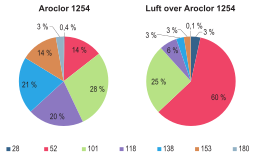
Figure 8. Relative distribution of sum7 PCB (PCB-28, PCB-52, PCB-101, PCB-118, PCB-138, PCB-153, and PCB-180) in caulk containing Aroclor 1254 and an estimate of the relative composition of sum7 PCB in air off-gassed from caulk containing Aroclor 1254 (Guo et al., 2011).
1.6.3 Correlation Between Temperature and PCBs in Indoor Air
Indoor-air PCB concentrations increase proportionally to rising temperatures because the vapour pressure of the congeners rises. The type of caulked joint also impacts the off-gassing (see Section 1.2, Physico-Chemical Properties) (Guo et al., 2011).
How off-gassing is dependent on temperature is evident from measurements in the flats on the Farum Midtpunkt housing estate (Lundsgaard, 2011). For example, at the housing estate fluctuations in temperature can explain 67 % of the variations in the indoor air measurements, independent of the remediation interventions implemented. Based on the temperature dependence discovered in the flats, it is possible to predict that an indoor-air PCB concentration of approx. 700 ng PCB/m3 at 18 °C will rise to 925 ng PCB/m3 at 20 °C and 1,600 ng/m3 at 24 °C. Indoor-air PCB concentrations are thus doubled at a rise in temperature from 18 to 24 °C. Another study from the flats indicated a correlation between PCB concentrations in the air and temperature (Kolarik et al., 2014).
A Swiss study indicated a faint correlation between room temperature and total PCB content in the air (Kohler et al., 2005).
In a German study (Balfanz et al., 1993), indoor-air PCB concentrations were measured during both summer and winter in ten rooms at comparable temperatures (see Figure 9). These measurements indicated that the outdoor temperature affects concentrations as PCB concentrations in summer were higher than those in winter. This might be caused by reduced off-gassing from the caulk in winter due to lower wall temperatures or could be caused by the increased air exchange rate due to the pronounced difference between outdoor and indoor temperatures. Another German study measuring indoor-air PCB concentrations in an office building also indicated a variation comprising rising PCB concentrations at higher outdoor temperatures (Benthe et al., 1992).
How PCB-concentrations are dependent on temperature was investigated in a room in a vacated flat heavily contaminated by PCBs (Lyng et al., 2015a). Measurements at different temperatures ranging from 20 °C to 28 °C were made, avoiding direct sunlight and using a settling time of 72 hours after each temperature change. Other measurement conditions (e.g., air exchange rates) were kept as constant as possible. The measurements indicated that concentrations rose proportionally to the temperature and the rise was equivalent to the rise theoretically calculated for vapour dependency on temperature.
![Indoor-air PCB concentrations (total PCB [ng/m3]) in ten rooms measured during summer and winter at comparable indoor temperatures](img/1748434681315.svg "Figure 9.")
Figure 9. Indoor-air PCB concentrations (total PCB [ng/m3]) in ten rooms measured during summer and winter at comparable indoor temperatures (after Balfanz et al., 1993).
1.6.4 Correlation between Air Exchange and PCBs in Indoor Air
The air exchange rate in a building affects PCB concentrations in the air and this rate will usually vary in the different rooms. Several factors influence air exchange rates and wind load on the building may result in different measurements on the leeward and windward sides of the building.
An analysis of PCB concentrations in a building’s indoor air will typically incorporate information about the building’s ventilation conditions. For an existing ventilation system, it is relevant to know whether it functions via injection or extraction and with a night-time setback (see section 9.3.4, Increasing Air Exchange Rates, and SBi Guidelines 242, Renovering af bygninger med PCB (Renovating Buildings Containing PCBs), (Andersen, 2013b). Reviewing several cases with elevated PCB concentrations in indoor air have shown reductions in concentrations by increased, correctly adjusted, and balanced ventilation (Lyng et al., 2014).
It is not clear how significant air exchange rates are for indoor-air PCB concentrations. Off-gassing from PCB-containing materials is not constant because temperature affects source emission. The actual air concentration may also affect the off-gassing. However, the various sources are affected in different ways. Off-gassing from a source with a high PCB concentration and a relatively small surface area like a caulked joint will only be affected to a very small extent by changes in indoor-air concentrations. All things being equal, this means that increasing the air exchange rate will dilute the source contribution from this type of primary source. For tertiary sources with a relatively low PCB content and a large surface area (e.g., walls, ceilings, and floors) the level of PCB concentrations in the air may have a significant impact on whether these surfaces will sorb or emit PCBs to the indoor air. In circumstances when these source types emit PCBs to the indoor air, increasing the air exchange rate will potentially produce increased off-gassing. This means that increasing the air exchange rate will only contribute negligibly to diluting the source, as the drop in concentration is countered by increased emissions. Hence, increasing the ventilation may have less of an effect on PCB concentrations than expected. The latter is illustrated by field studies in which increasing the air exchange rate in a classroom and two bedrooms (with encapsulated interior PCB-containing caulk) did not trigger a corresponding drop in indoor-air PCB concentrations (Lyng et al., 2015b).
1.6.5 PCBs in Indoor Air and Dust
In the flats on the Farum Midtpunkt housing estate, separate measurements were made of PCBs in air and dust. PCB concentrations in dust are reported as mg/kg dust and PCB concentrations in dust are thus not directly comparable to PCB concentrations in air. Based on the measurements, it is estimated that dust makes up less than 10 % of the daily ingestion of PCBs (Lundsgaard og Mørck, 2010). Another study based on dust collected separately indicated a correlation between the total PCB content in air and dust. From the same study, it may be concluded that considerably fewer PCBs are ingested orally via dust than via air inhalation (Gunnarsen et al., 2009).
In laboratory studies, transport paths between dust and PCB-containing caulk and PCB-containing air were studied. These studies indicate that dust sorbs PCBs in two ways. Dust sorbs PCBs from the air as well as from primary sources via direct contact. The sorption of PCBs from air to dust varies for each congener and the highly chlorinated congeners are sorbed more efficiently by dust, although there were fewer of them in the air. The direct PCB migration from primary sources is not dependent on the off-gassing properties of the various congeners. The studies indicated that the rate at which PCBs migrate from a primary source to dust is considerably higher than the rate of migration between air and dust (Guo et al., 2012).
In one of the studies from the Farum Midtpunkt flats, the composition of congeners in the interior caulk is mostly consistent with Clophen A40 and Aroclor 1248. Measurements of congener composition in air and dust indicate that the airborne composition is clearly different from that of the caulk while the composition of dust is midway between the congener patterns seen in air and caulk (Lundsgaard & Mørck, 2010). The composition of congeners is consistent with the laboratory study results referred to above.
1.6.6 PCBs in Indoor Air in Danish Buildings
Based on the mapping of PCBs in materials and indoor air (Grontmij & COWI, 2013), the report estimates how many buildings, erected during the period 1950–1977, are expected to exceed the action values for PCBs in indoor air of 300 ng/m3 and 3,000 ng/m3, recommended by the Danish Health Authority. Their share of the total number of buildings in Denmark (i.e., not only buildings erected during the period 1950–1977) was also estimated. The buildings were classified into three categories: single- and two-family dwellings, multi-story residential buildings, and public institutions and public and private office buildings. The results are reported in Table 8.
Table 8. Estimated number of buildings with PCBs in the indoor air (90 % prediction intervals), broken down according to the Danish Health Authority’s recommended action values and different building types (Grontmij & COWI, 2013).
No. of Buildings Erected During the Period 1950–1977 | Share of All Buildings1) [%] | |||||
|---|---|---|---|---|---|---|
≥ 300 ng/m3 | 300–3,000 ng/m3 | ≥ 3,000 ng/m3 | ≥ 300 ng/m3 | 300–3,000 ng/m3 | ≥ 3,000 ng/m3 | |
Single- and two-family dwellings | 19,300–22,800 | 18,900–22,000 | 390–810 | 1.3–1.6 | 1.3–1.5 | 0.03–0.1 |
Multi-story residential buildings 2) | 610–800 | 590–750 | 7–31 | 0.7–0.9 | 0.7–0.9 | 0.01–0.03 |
Public institutions and public and private office buildings | 1,600–2,600 | 1,600–2,400 | 30–230 | 0.9–1.5 | 0.9–1.4 | 0.02–0.14 |
- This includes all buildings in Denmark, not just the buildings erected during the period 1950–1977.
- This number relates to multi-storey residential buildings and not the individual flats (the latter is at least ten times bigger than the former).
1.7 Air Measurements
This section introduces methods for measuring PCBs in air and details collection media, sample volume, and measurement conditions.
1.7.1 Methodology
Most measurements of PCB concentrations in indoor air are done by actively drawing air through a filter and a sorbent which is subsequently subjected to analytical testing (Barroa et al., 2009). Different measurement standards exist for measuring PCBs in indoor air (Danish Standards, 2008a; US EPA, 1999; Verein Deutcher Ingenieure, 2009). The Danish Business and Building Authority has published guidelines based on Danish and foreign experience, largely following the guidelines in German and international standards (the Danish Business and Building Authority, 2010). These guidelines have appeared in an updated version, detailing two methods for passive collection of PCBs from indoor air (the Danish Transport, Construction, and Housing Authority, 2015).
PCBs in indoor air can also be determined via passive collection without using pumps with active suction. Two Danish methods have been developed for passive air sampling of PCBs, capable of estimating whether there are elevated PCB concentrations in indoor air (Vorkamp & Mayer, 2014). The methods are described in Section 7.2.2, Passive PCB Sampling.
In practice, it can be difficult to follow a documented methodology completely and deviations are allowed if documentation exists to demonstrate that the deviations do not impair the efficacy of the method. Several issues should be considered when selecting a method (see Section 7, Determining PCB Content in Indoor Air).
1.7.2 Sampling Medium
PCBs exist in a gaseous as well as a solid form bound to particles in air. It is therefore necessary to determine both gaseous and particle-borne PCBs. PCBs are collected effectively on a particle filter followed by a combination of polyurethane foam (PUF) and a resin (e.g., XAD-2). The share of PCBs in particle form depends on several factors (e.g., particle type and amount, temperature, and the specific congeners).
During the measuring period, substances attached to particles collected in the particle filter can off-gas, but the gas will subsequently be collected by the adsorbing medium. Glass is typically used as a receptacle for the sampling medium. Fibreglass or quartz filters are used as particle filters. In their gaseous form, the light congeners are collected most effectively by XAD-2 as compared to PUF while the heavy congeners (e.g., PCB-180) are collected most effectively by PUF (Lewis et al., 1977; Lewis & MacLeod, 1982; Hayward et al., 2011).
When determining PCBum7, a filter followed by XAD-2 is probably adequate as the concentration of the high-chlorinated congeners often constitutes a small part of the PCB content in indoor air (see Section 1.6.2, Correlation between Indoor-Air Congener Type and Building Materials). The advantage of omitting PUF in the collection tube is that the subsequent extraction can be performed in a simpler way (Barroa et al., 2009). In a building where high-chlorinated PCB products have been used, it is necessary to check whether XAD-2 is sufficient or whether PUF should be part of the sampling medium.
Passive Sampler
Two methods have been developed to determine PCBs in indoor air (Vorkamp & Mayer, 2014) and both methods are based on silicon collection (see Section 7.2.2, Passive PCB Sampling).
1.7.3 Flow and Sampling Period
Measurement scope and the limit of detection within the analysis will determine the sample volume and sampling period. Sampling PCBs from air has much in common with the method for sampling both dioxins and chlorinated pesticides. Given that most of these substances are present in very low concentrations in air, relatively large quantities of air are sampled. The German standard VDI 2464 (Verein Deutscher Ingenieure, 2009) recommends a sample volume of 3–24 m3 sampled over 1–8 hours while the standard EN ISO 16000-12 (Danish Standards, 2008a) recommends a sample volume of 5–10 m3 over 2–4 hours. Both standards specify that the flow rate must not exceed 5–10 % of the room’s air volume per hour.
Typically, large air volumes are not necessary to detect PCBs in polluted buildings. American guidelines (US EPA, 1999) operates with a low flow rate (1–5 l/min) with exposure times of 4–24 hours. The Danish Transport, Construction, and Housing Authority (2015) recommends 4–16 hours of exposure at a low flow rate (1–5 l/ min) (i.e., 500–1,000 l of sample volume). The guidelines allow 24-hour samples to be taken for practical reasons, but they emphasise that the room must be occupied as usual during sampling.
Thus, the recommended sampling periods range from 4 to 24 hours. Flow rates should be adapted to the selected sampling medium so that air retention time in the sampling medium is sufficient to collect the substances effectively.
1.7.4 Measurement Conditions
According to the standard EN ISO 16000-12 (Danish Standards, 2008a), as far as possible, start conditions should be specified prior to commencing measurements. This is performed to avoid interference due to open fire and smoking, for example. The standard recommends that the room is well ventilated and that afterwards doors and windows are kept closed for about eight hours, or preferably overnight. Measurements are commenced after the room has been conditioned. The following method is used in several studies: airing by opening windows for 10–15 minutes the evening before the sampling, closing doors and windows overnight, and then commencing measurements in the morning in rooms with closed windows and doors (Heinzow et al., 2007; Kohler et al., 2002).
In Germany, more than one hundred PCB-contaminated buildings were surveyed, and priority was given to comparable conditions where, based on experience, airing prior to measuring was omitted. The doors were closed for min. three hours prior to sampling and the measurement was performed in unoccupied rooms during otherwise normal conditions (Balfanz et al.,1993). In connection with two Danish studies, air samples were collected over 24 hours in several different buildings. The buildings were not conditioned prior to measuring and the rooms were occupied normally during the measurement period (Gunnarsen et al., 2009; Frederiksen et al., 2012). Thus, there are different methods for airing and conditioning rooms prior to measuring.
1.8 Rules
In 1973, the OECD recommended that PCBs be controlled and their use partly suspended (Danish EPA, 1974).
The First Statutory Orders
In 1976, the first statutory orders on limiting the import and application of PCBs in Denmark were issued. These included the Ministry of Environment’s Statutory Order restricting the import and use of PCBs and PCTs (BEK no.18 of 15/01/1976, Ministry of Environment, 1976a) and the Ministry's Statutory Order on changes and the effective date of this statutory order (BEK no. 572 of 26/11/1976, Ministry of Environment, 1976b). The statutory orders meant that, from 1 January 1977, PCBs were banned in open applications (i.e., caulk, paint, adhesives, plastic, and other open applications). The statutory order was issued due of an EU directive. The use of PCBs was still permitted in closed applications (e.g., capacitors, transformers, heat-exchanger, and hydraulic fluids).
In 1986, all imports and sale of PCBs was banned regardless of application (Ministry of Environment, 1986). Until 1 January 1995, however, the use PCBs was permitted in large transformers and capacitors weighing 1 kg or over, or with an effect of more than 2 kVAr. Smaller capacitors and transformers could be used for the remainder of their lifespan. In 1998, requirements stipulated large transformers and capacitors to be disposed of no later than 1 January 2000 (Ministry of Environment, 1998).
Existing Rules
Today, PCBs are completely banned and feature on the EU list of hazardous substances where they are designated as one of the persistent organic pollutants (POPs). The Stockholm convention lists PCBs as one of the twelve environmental toxins designated the ”Dirty Dozen”. Most countries have ratified the convention which took effect in 2004, banning production of PCBs and regulating how to manage and dispose of PCB-containing waste. Regulation (EC) No. 850/2004 in the EU legislation (The European Parliament and the Council of the European Union, 2004) enacted the obligations resulting from the Stockholm Convention on persistent organic pollutants. This regulation is referred to as the ”POPs Regulation”.
The Danish Health Authority issues recommended action values for PCB concentrations in the indoor climate (Danish Health Authority, 2013a) (see Section 1.3.5, Recommended Action Values).
The Danish WEA issues recommended action values for the indoor climate based on the Health Authority’s recommended action values, but for shorter occupancy times (Danish WEA, 2014) (see Section 1.3.5 Recommended Action Values).
For renovation or demolition work where material parts are contaminated by PCBs, personal protective equipment PPE must be worn according to the Danish WEA (Danish WEA, 2014) (see SBi Guidelines 242, Renovering af bygninger med PCB, 3 Beskyttelse af mennesker og miljø (Renovating Buildings Containing PCBs, 3 Protecting People and the Environment)) (Andersen, 2013b).
The Ministry of Environment stipulates rules for managing and disposing of PCB-containing waste, (Ministry of Environment, 2012) (see Section 3, Surveys Prior to Renovation or Demolition, and SBi Guidelines 242, Renovering af bygninger med PCB, 4 Affaldshåndtering (Renovating Buildings Containing PCBs, 4 Waste Management)) (Andersen, 2013b).
The responsibilities and duties of the various actors in a case concerning building-related PCBs are listed in a fact sheet published by the Ministry of Business Affairs (Ministry of Industry, Business and Financial Affairs, 2011).